

Targeting disease at its source: protein degradation at the point of synthesis
Developing small-molecule therapies that selectively degrade disease-driving proteins upstream before damage occurs, beginning with immuno-inflammatory disorders.
More about the project
Stopping disease-driving proteins before they harm
Many disease-driving proteins become pathogenic only after synthesis and secretion.
Our approach acts at the start of protein synthesis, selectively eliminating these proteins before they can drive disease.
The Sec61 translocon: a key control point in protein secretion
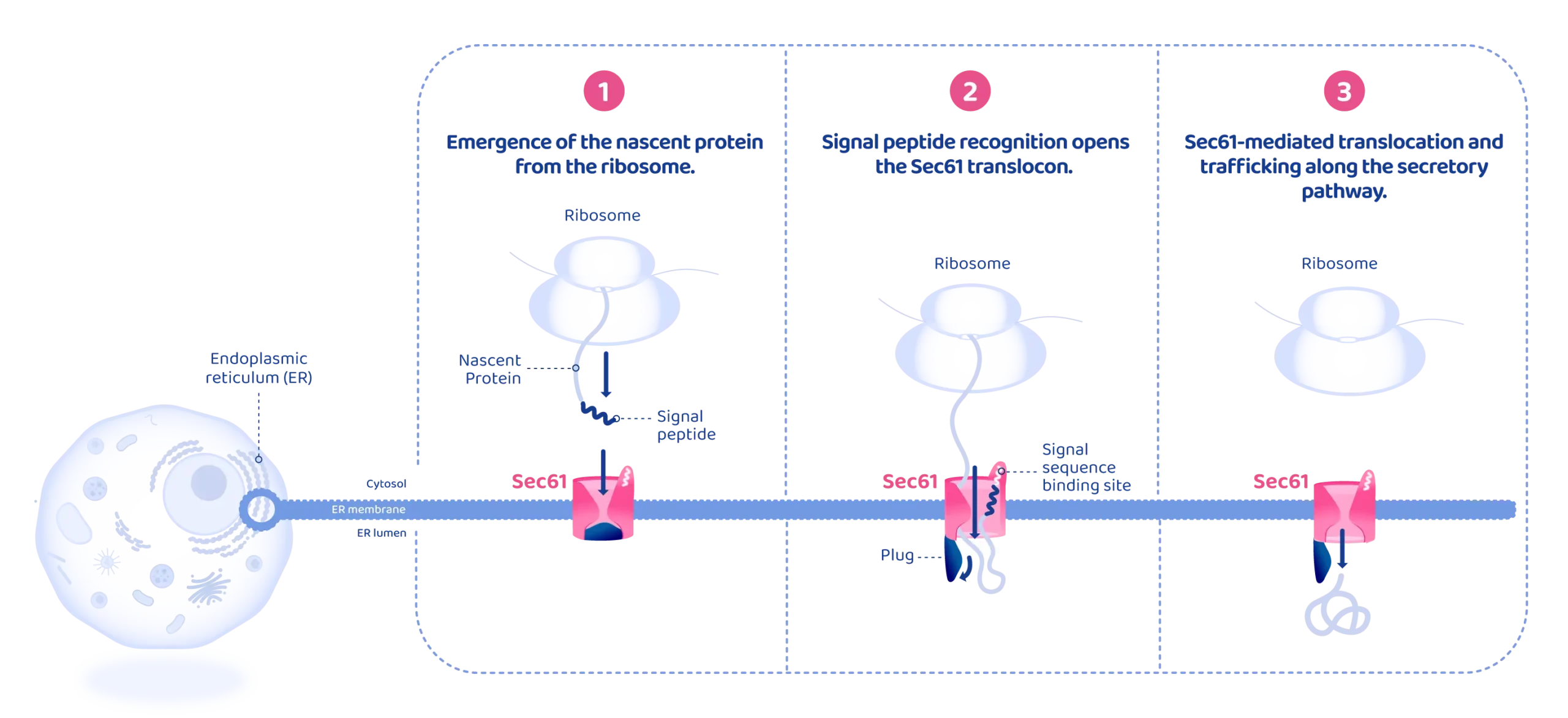
The majority of secreted proteins and a large proportion of transmembrane proteins are clients of the Sec61 translocon for crossing the endoplasmic reticulum membrane.
of secreted proteins
of transmembrane proteins
Targeting the Sec61 translocon: an innovative therapeutic strategy
By intervening at the point of synthesis, our approach enables selective degradation of disease-driving proteins before they mature, while preserving essential physiological protein secretion.
- The Sec61 translocon controls the entry of secretory and membrane proteins into the endoplasmic reticulum (ER).
- Signal peptide recognition opens the Sec61 translocon, enabling protein translocation into the ER.
- Following translocation through Sec61, proteins undergo stepwise maturation as they traffic along the secretory pathway.
One biological mechanism, multiple therapeutic opportunities.
Our lead programs target inflammatory and autoimmune diseases.
From discovery to development
Built by Argobio and supported by: